
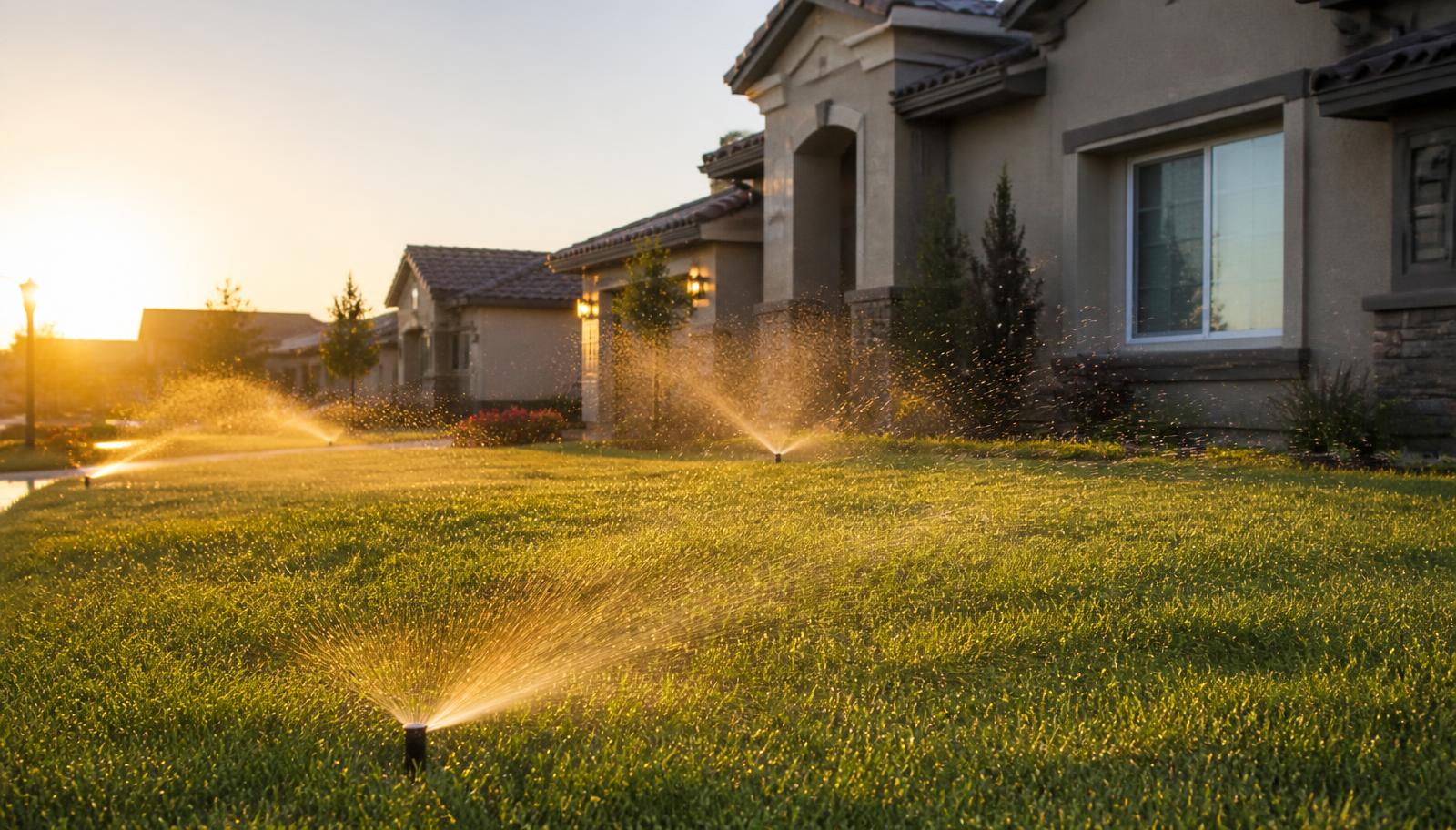
Harlan Ranch & Loma Vista Sprinkler Schedule: Beat the Clovis Heat All Summer
Drive through Harlan Ranch or Loma Vista on a July afternoon and you'll notice something odd: half the lawns are lush, and half look like they're giving up. Nearly every home in these newer Clovis developments came with a Hunter or Rain Bird smart controller straight from the builder. The hardware is good. The problem is almost nobody touches the factory schedule after move-in day, and a factory schedule built for a mild spring has no idea what a 108°F August afternoon feels like on Bermuda or fescue.
Below is the exact watering schedule we set for our route customers across Harlan Ranch, Loma Vista, and the older pockets of Old Town Clovis plus the small controller tweaks that make the biggest visible difference.
Key Takeaways
- Bermuda lawns in Harlan Ranch and Loma Vista do best on 3 waterings a week, split into 2 cycles of about 8 minutes per rotor zone.
- Fescue lawns keep the same 3-day rhythm but need longer 12–15 minute cycles per zone.
- Push the seasonal adjust dial on Hunter or Rain Bird controllers up to 110% once August heat arrives.
- Skip a scheduled watering day entirely after a real summer rain the controller won't do this for you.
- Older Old Town Clovis systems on hose-end timers or basic 6-station controllers often use up to 30% more water than needed until upgraded with MP rotator nozzles.
- Brown ring patterns, geysering heads, or two zones running at once mean it's time for a professional look, not another schedule tweak.
Why a “Smart” Controller Doesn't Mean a Smart Schedule
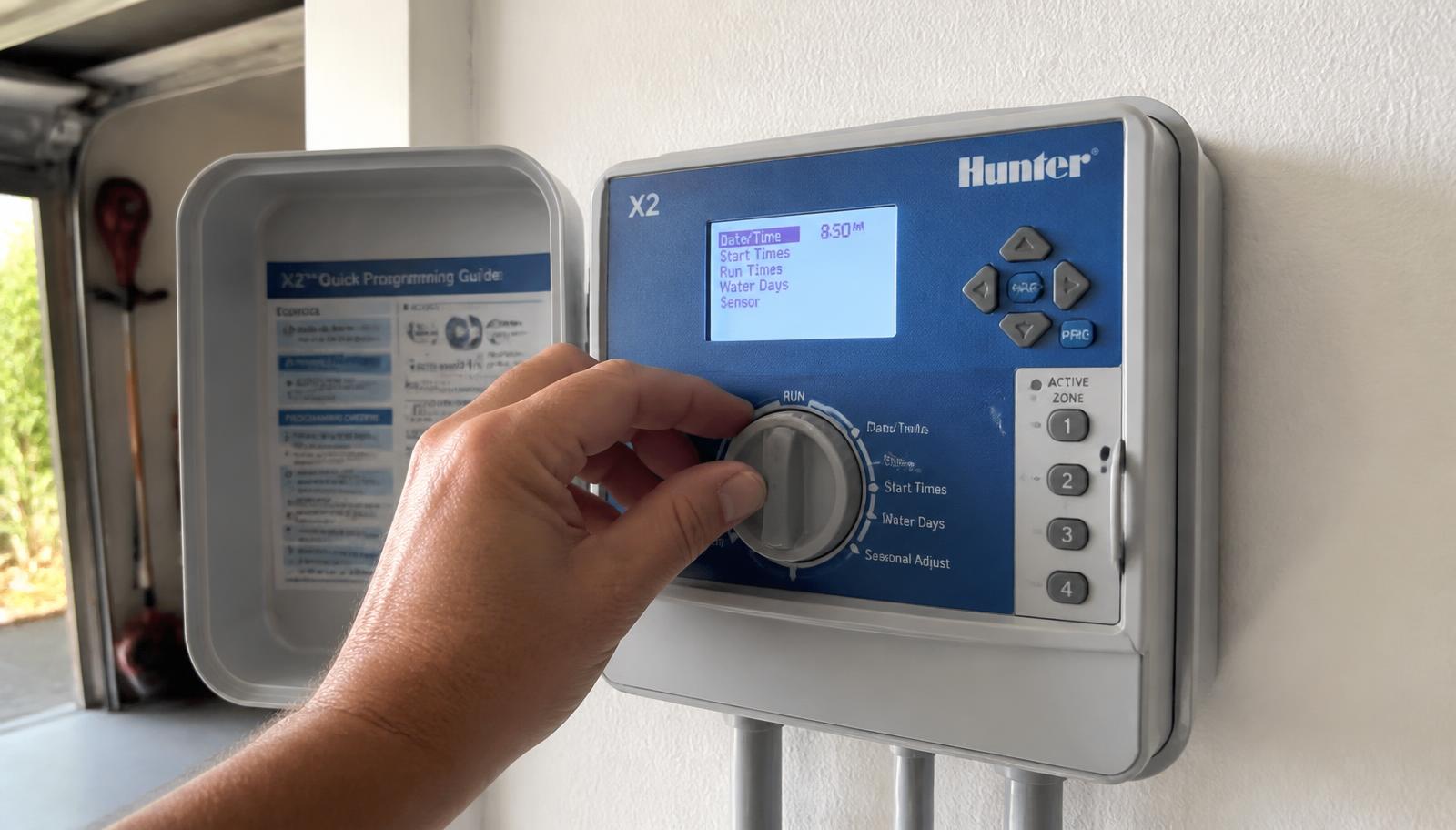
A Hunter or Rain Bird box is only as good as the program inside it. We see the same pattern on almost every route stop in these neighbourhoods: rotors running the same 10 minutes in April, June, and September, drip lines sharing a schedule with turf, and a seasonal adjust dial that's never been touched since installation. That mismatch is usually the real reason a two-year-old lawn looks tired by midsummer not the soil, not the grass variety, and not bad luck. If your zones are already running on a reasonable schedule and the lawn is still struggling, the issue is likely mechanical rather than programming, which is when it's worth booking sprinkler repair across central valley before the heat does permanent damage to the root system.
The Clovis Summer Baseline: Bermuda vs. Fescue
Harlan Ranch and most newer Loma Vista lots were sodded with hybrid Bermuda, while a smaller share of yards especially shaded front lawns run fescue. The two need different run times, even on the exact same controller:
| Lawn Type | Days / Week | Cycles / Day | Minutes per Zone (Rotors) | Best Start Time |
|---|---|---|---|---|
| Bermuda (most common) | 3 | 2 | 8 minutes | Before 8:00 a.m. |
| Fescue / tall fescue | 3 | 2 | 12–15 minutes | Before 8:00 a.m. |
| Shrub & flower bed drip | 2–3 | 1 | 30–45 minutes (low flow) | Early morning, separate program |
Two habits make the biggest difference beyond the base schedule. First, split each day's water into two shorter cycles instead of one long soak clay-heavy Clovis soil sheds water fast, and a single long cycle just runs off into the gutter before it soaks in. Second, treat drip lines for shrubs as their own program entirely. Shrubs and turf have completely different root depths and water needs, and running them together is one of the most common overwatering mistakes we find on new-build lots.
This lines up with university turfgrass research, which generally recommends watering established lawns deeply but infrequently typically two to three times a week rather than daily to encourage deeper, more drought-tolerant roots. You can read more detail in UC ANR's guide to irrigation cycling for home lawns.
Dialing In the Seasonal Adjust
The single most under-used feature on Hunter and Rain Bird controllers is the seasonal adjust (sometimes called “water budget”) dial. It lets you scale every zone's run time up or down by a percentage without reprogramming each station individually. Here's how we use it on our route:
- June: leave the base schedule at 100%.
- Late July through August: bump the seasonal adjust to 110% to cover peak evapotranspiration.
- Any week with real rainfall: skip the next scheduled run entirely, or drop the adjust to 0% for that cycle.
- September: dial back to 90% as temperatures ease.
If you want to fine-tune run times further based on your specific sprinkler output and grass type, the UC Lawn Watering Guide for California walks through how to measure your system's application rate and translate it into weekly minutes useful if you want to go beyond the general Clovis baseline above.
Old Town Clovis: A Different Animal
Not every Clovis yard on our route is a new build. Old Town Clovis homes are often 20–40 years old and were never retrofitted with a smart controller. The equipment gap between these systems and what you'll find in Harlan Ranch or Loma Vista is bigger than most homeowners realize:
| Feature | Old Town Clovis (older homes) | Harlan Ranch & Loma Vista (new builds) |
|---|---|---|
| Typical controller | Hose-end timer or basic 6-station box | Hunter or Rain Bird smart controller |
| Standard nozzle type | Fixed-pattern rotor nozzle | Factory rotor nozzle (upgradeable) |
| Seasonal adjustment | Manual only, rarely used | Built-in seasonal adjust dial |
| Typical water efficiency gain after nozzle upgrade | Up to 30% less water for the same coverage | N/A — already efficient by design |
On most of these older systems, we swap the original rotor nozzles for MP rotators same coverage pattern, same zone layout, but a slower, more uniform stream that soaks in instead of running off. It's usually the single best upgrade for a 20-year-old system that's never been touched.
The Warning Signs You Shouldn't Ignore
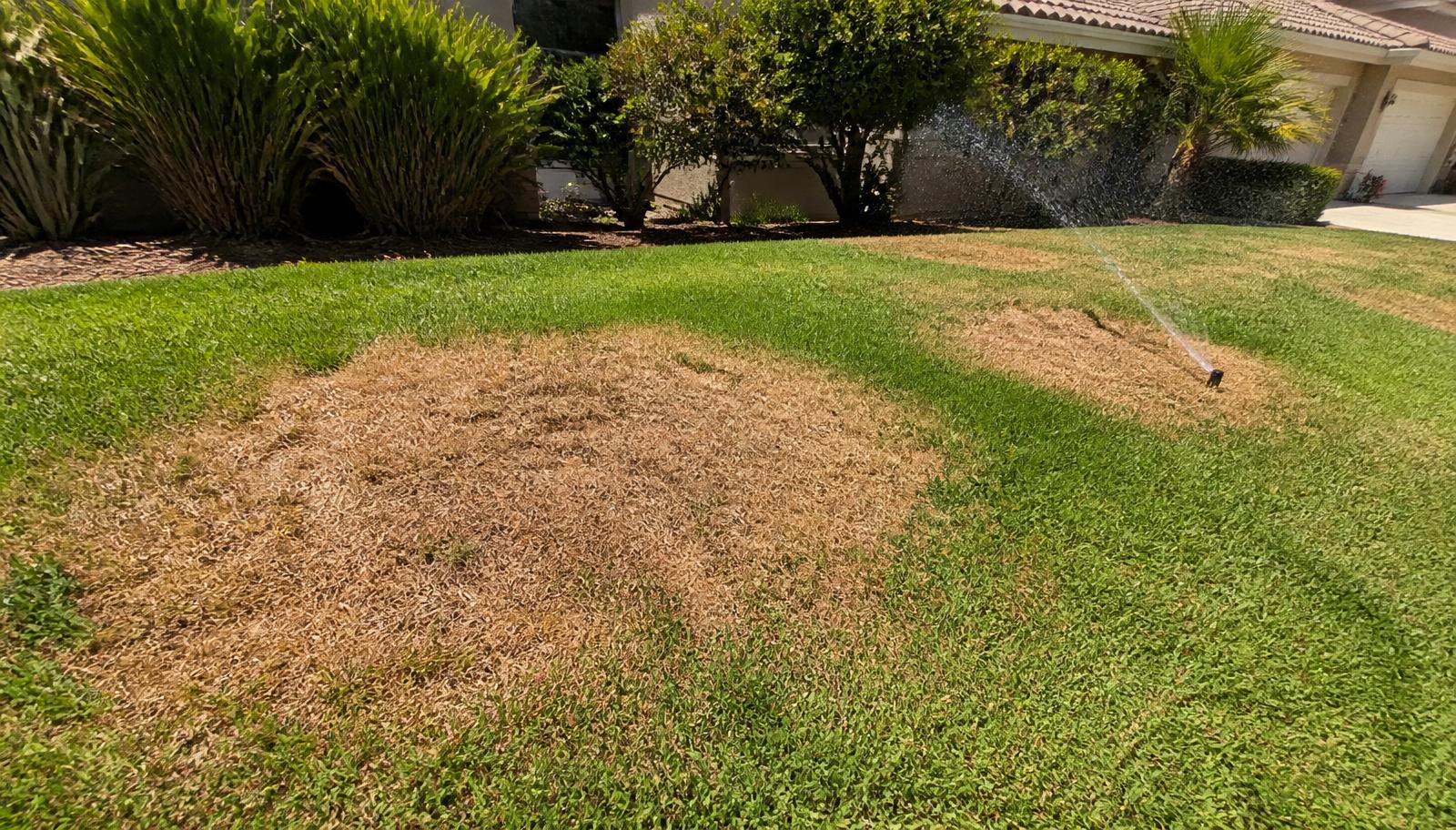
A schedule adjustment fixes a lawn that's stressed but otherwise healthy. It won't fix hardware. Call for a system check if you notice any of the following:
- Brown, ring-shaped dry patches that show up in the same spot every summer
- Heads that geyser, spray sideways, or barely trickle
- Two different zones running water at the same time (a sign of a stuck valve)
- Water pooling in the gutter or on the sidewalk minutes into a cycle
Keep It Simple: Let a Local Crew Handle the Rest
Every yard on our Clovis route gets this same treatment: a schedule built around its actual grass type, a controller that gets adjusted as the seasons change, and a quick walk-through of every zone to catch small problems before they become brown patches. That's the approach Efrain Lawn Service takes on every weekly route stop and every standalone sprinkler visit, whether you're in a brand-new Harlan Ranch build or a 30-year-old Old Town Clovis home. If your system needs hands rather than just a new schedule, call (559) 480-9299 and we'll walk every zone and give you a fixed quote on the spot.

Tap. Talk. Done.
Want your Clovis sprinklers dialed in before the next heat wave?
We'll program your Hunter or Rain Bird controller for Bermuda or fescue, check every zone, and fix the heads that are burning your lawn. Contact Efrain Lawn Service for a free, in-person estimate.
Open Mon-Sat · Same-day callbacks · Se habla español