Key Takeaways
- Trim most established hedges every 6 to 8 weeks during active growth, adjusting the schedule based on plant type, growth rate, and season.
- Avoid aggressive pruning during extreme Central Valley heat and use lighter, more frequent trimming when appropriate.
- Maintain hedges slightly wider at the base than the top to encourage more even light exposure and foliage growth.
- Different shrubs require different pruning approaches, so identify the plant and its growth pattern before trimming.
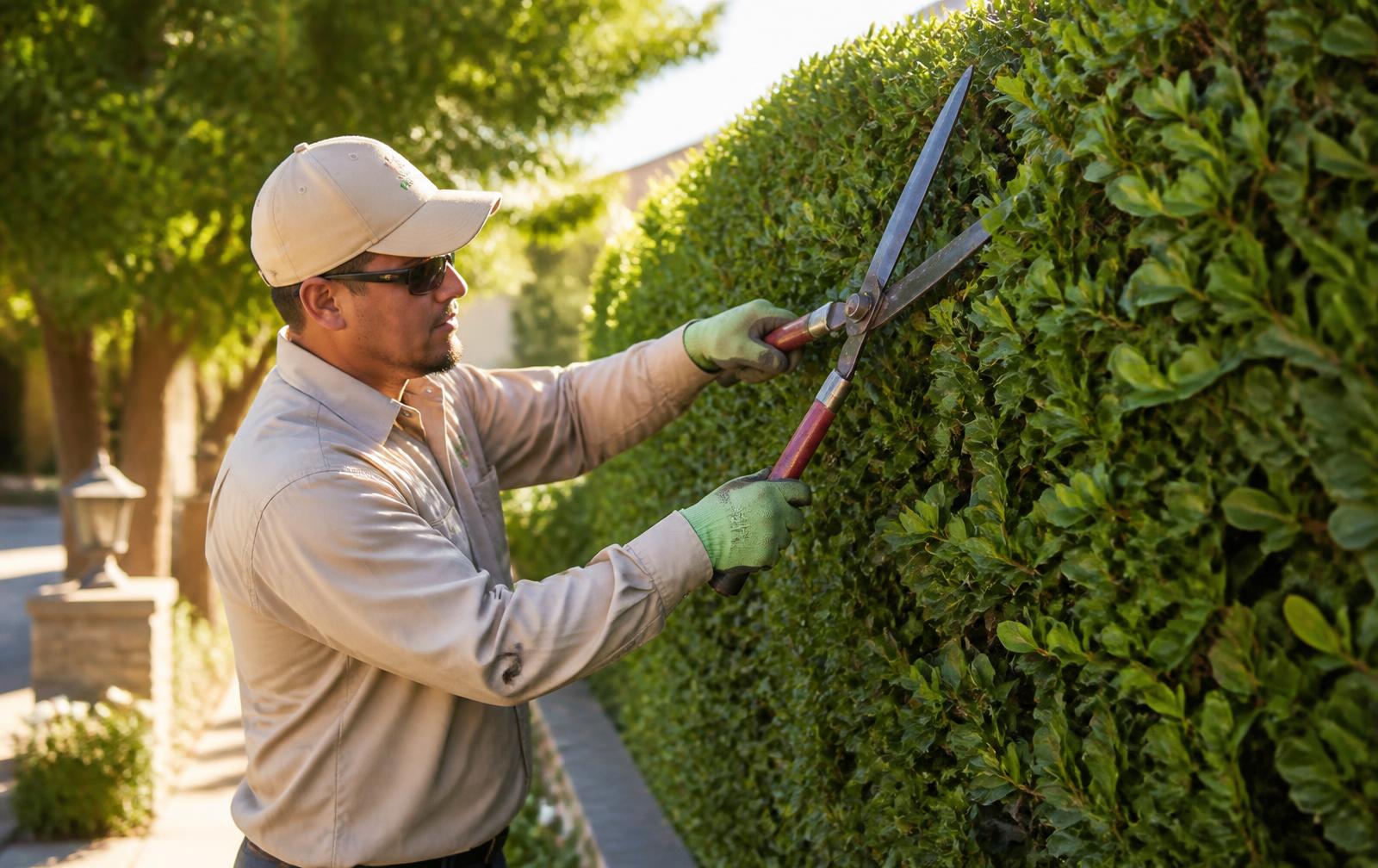
A well-maintained hedge can frame a property, improve privacy, and give a landscape a polished appearance. But how often should hedges be trimmed in the Central Valley? The answer depends on the plant species, growth rate, season, and the shape you want to maintain. Proper hedge trimming in Central Valley is not simply about cutting back overgrown branches. Timing, technique, and the amount of growth removed all influence how well hedges respond.
How Often Should Hedges Be Trimmed in the Central Valley?
Most established hedges benefit from light trimming every 6 to 8 weeks during periods of active growth, although faster-growing varieties may need attention more frequently. Slower-growing shrubs may only need a few maintenance trims each year.
Central Valley summers also require some care. Heavy shearing during periods of intense heat can expose previously shaded foliage and woody stems to strong sunlight. Light, more frequent trimming is generally preferable to removing a large amount of foliage at once.
A practical schedule depends on:
- Plant species and growth rate
- Desired hedge height and shape
- Amount of new growth
- Season and weather conditions
- Whether the hedge is formal or naturally shaped
Why Timing Matters for Hedge Trimming in Central Valley
Central Valley's hot, dry summers can affect how shrubs respond to pruning, so trimming should be based on the plant's growth cycle rather than a fixed schedule. Spring may require more frequent shaping, while summer calls for lighter pruning, especially during extreme heat.
Flowering shrubs also need extra care, as trimming at the wrong time can remove developing buds. Always consider whether a plant blooms on old or new growth before pruning.
What Is the Best Shape for a Hedge?
The best hedge shape is usually slightly wider at the bottom than at the top. This allows sunlight to reach lower foliage instead of creating a dense upper layer that shades the base.
Avoid forcing every hedge into a perfectly square shape simply because it looks uniform. A gently tapered or rounded profile can be easier to maintain and may better suit the plant's natural growth habit.
When performing hedge pruning in Central Valley landscapes, focus on maintaining the desired size while preserving healthy foliage throughout the plant.
Hedge Trimming vs. Shrub Trimming: What Is the Difference?
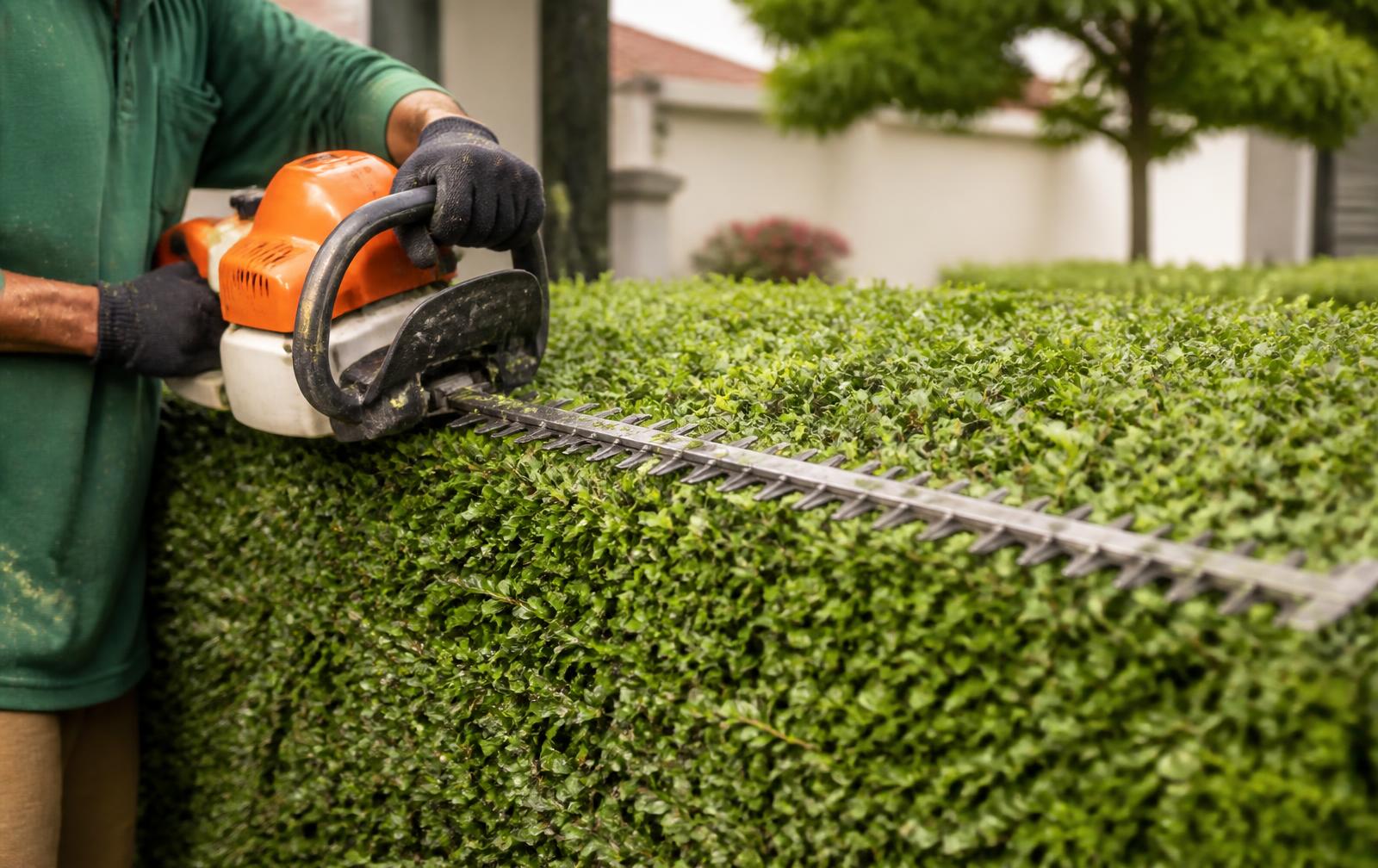
Hedges are generally maintained for a defined boundary, screen, or formal appearance, while individual shrubs may be pruned primarily for health, size control, flowering, or natural shape.
| Hedge Trimming | Shrub Trimming |
|---|---|
| Maintains a consistent shape | Maintains natural form or size |
| Often requires repeated light cuts | Frequency depends on species |
| Focuses on density and uniformity | Focuses on structure and appearance |
| Common for privacy screens and borders | Common for individual landscape plants |
Good shrub trimming in Central Valley properties should not automatically mean shearing every plant into the same shape. Some shrubs respond better to selective removal of older, damaged, or poorly positioned branches.
Best Practices for Healthier Hedges and Shrubs
Professional results start with understanding the plant before making the first cut. A few practical rules can make a significant difference:
- Inspect the plant first. Look for dead, damaged, crossing, or diseased branches that may need selective removal.
- Use clean, sharp tools. Dull blades can make rough cuts and crush stems instead of producing clean cuts.
- Avoid removing too much at once. If a hedge is significantly overgrown, gradual reduction may be safer than aggressive shearing.
- Maintain the correct profile. Keep the base slightly wider than the top to encourage more even light exposure.
- Watch for heat stress. During very hot weather, avoid unnecessary heavy pruning that suddenly exposes interior foliage.
- Know the plant. Pruning requirements vary considerably between evergreen, deciduous, flowering, and fast-growing species.
UC Agriculture and Natural Resources emphasizes that pruning should support a plant's intended form, health, and landscape purpose rather than simply removing growth.
When Should You Hire a Professional?
If a hedge is overgrown, woody, uneven, or difficult to access, professional care can help prevent bigger landscaping issues. Professional bush trimming in Central Valley can also ensure different plant varieties are pruned according to their species, growth pattern, and location.
For ongoing maintenance, Efrain Lawn Service offers dedicated hedge trimming services to keep your hedges neat, healthy-looking, and properly shaped.
Keep Your Landscape Looking Its Best
Consistent maintenance is easier than trying to correct months or years of uncontrolled growth. The goal of hedge and shrub trimming in Central Valley landscapes should be balanced growth, manageable size, and a clean appearance without unnecessarily stressing the plants.
If you want to learn more about maintaining a healthy and attractive landscape, explore our landscaping blog for additional practical lawn and landscape care tips.
With the right timing, tools, and technique, regular trimming can keep your hedges looking intentional while supporting healthier, more manageable growth throughout the year.
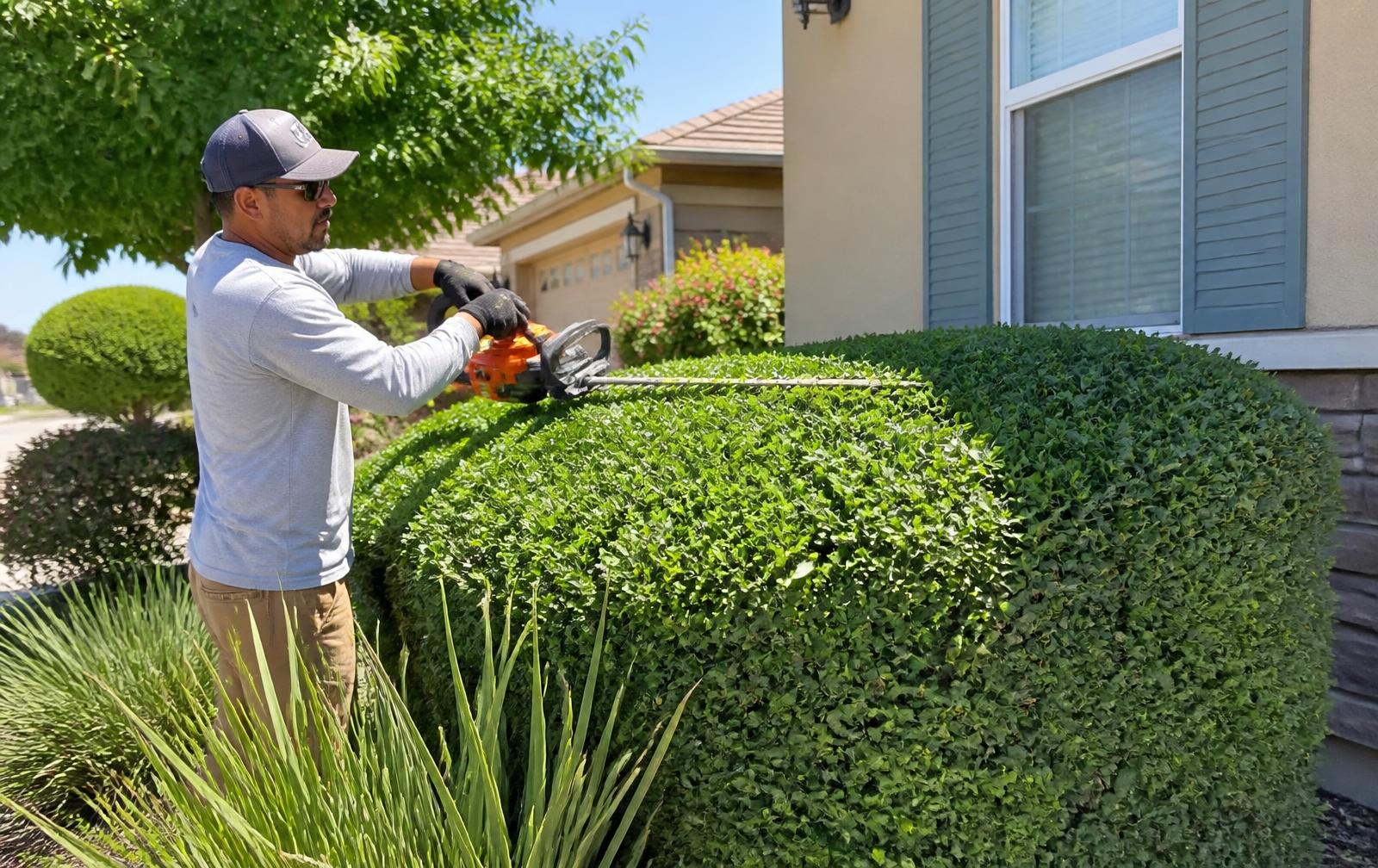
Keep your hedges neat, healthy-looking, and well-shaped with professional hedge trimming from Efrain Lawn Service.
Schedule your hedge trimming service today.
Frequently Asked Questions

Tap. Talk. Done.
Ready for neat, well-shaped hedges?
Free in-person estimates across Fresno and the Central Valley.
Open Mon-Sat · Same-day callbacks · Se habla español